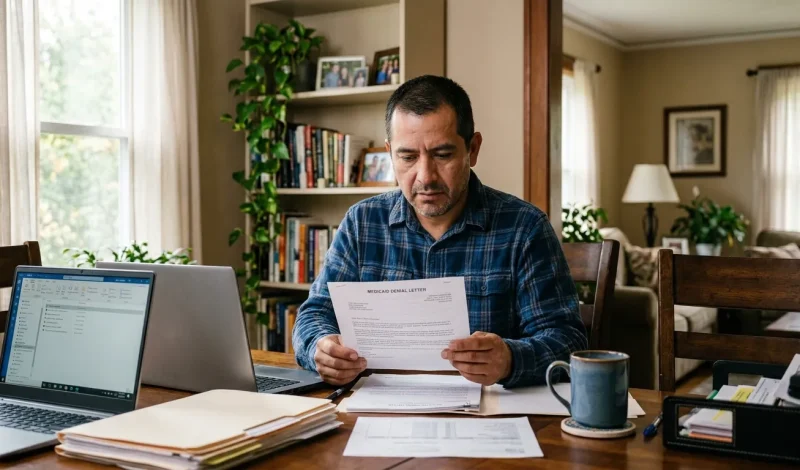

What to Do If Medicaid Application Is Denied in Florida (Step-by-Step Guide)
Getting a denial letter for Medicaid can feel stressful. You may wonder, what went wrong? and what should we do next? The good news is that a denial is not the end. Many people win their case after taking the right steps.
In this guide, we will explain how to handle a Medicaid denial appeal Florida process in simple terms. We will walk through each step so you can act with confidence.
Why Medicaid Applications Get Denied
Before we fix the problem, we need to understand it. Why do applications get denied?
Here are the most common reasons:
- Income is too high
- Missing documents
- Errors in the application
- Not meeting residency rules
- Medical need not clearly shown
Sometimes, the issue is small. A missing paper or wrong number can lead to a denial.
A report from the Kaiser Family Foundation (KFF) found that many Medicaid denials happen due to paperwork issues, not eligibility. In fact, procedural denials made up a large share of rejected cases.
So ask yourself: Was it really about eligibility, or just a mistake?
How to Appeal a Medicaid Denial in Florida?
Step 1: Read the Denial Letter Carefully
Your denial letter is the key. Do not ignore it.
It will tell you:
- The exact reason for denial
- The deadline to appeal
- Instructions for next steps
Take your time and read it twice. Highlight the reason for denial.
If something is unclear, ask for help. A small misunderstanding can cost time.
Step 2: Check the Appeal Deadline
Timing matters a lot.
In Florida, you usually have 90 days to request a hearing after a Medicaid denial. But acting early is always better.
Ask yourself: Can we submit the appeal this week?
If you wait too long, you may lose your right to appeal.
Step 3: Gather Your Documents
Now we fix the problem.
Collect all documents that support your case:
- Proof of income (pay stubs, bank statements)
- Medical records
- Identification
- Residency proof
- Any missing paperwork
Make copies of everything.
Here is a simple table to guide you:
Document Type | Why It Matters | Example |
Income Proof | Shows eligibility | Pay stubs, tax returns |
Medical Records | Shows health needs | Doctor reports |
Identity Proof | Confirms who you are | Driver’s license |
Residency Proof | Shows Florida residence | Utility bill |
Application Copies | Helps spot errors | Submitted forms |
This step is very important. Many appeals are won just by adding missing documents.
Step 4: File a Medicaid Denial Appeal in Florida
Now we move to the main step: the appeal.
To start a Medicaid denial appeal Florida, you need to request a fair hearing.
You can do this:
- Online
- By mail
- By phone
Include:
- Your name and case number
- A copy of the denial letter
- A short statement saying you want to appeal
Keep it simple. You do not need legal language.
Example:
“We disagree with this decision and request a fair hearing.”
That’s enough to start.
Step 5: Prepare for the Hearing
After filing the appeal, you will get a hearing date.
This is your chance to explain your case.
Ask yourself: What do we need to prove?
Focus on:
- Fixing the denial reason
- Showing correct information
- Explaining any mistakes
You can:
- Bring documents
- Call witnesses (like a doctor)
- Speak for yourself
A study by the Government Accountability Office (GAO) showed that applicants who provide clear documents and explanations have higher success in appeals.
So preparation makes a real difference.
Step 6: Attend the Hearing
The hearing may be by phone or in person.
Stay calm and clear.
Here are simple tips:
- Speak honestly
- Stick to facts
- Answer questions clearly
- Do not interrupt
The judge or officer will review your case.
You may feel nervous. That’s normal. Just focus on telling your side.
Step 7: Wait for the Decision
After the hearing, you will receive a decision.
This may take a few weeks.
If you win:
- Your Medicaid benefits will start or resume
If you lose:
- You may have other options
Do not lose hope. Many people try again and succeed.
What If Your Appeal Is Denied?
Sometimes, even the appeal is denied.
So what can we do next?
You still have options:
1. Reapply for Medicaid
Your situation may have changed.
- Income may be lower
- Medical condition may be worse
Submit a new application with updated details.
2. Seek Legal Help
A Medicaid lawyer or legal aid group can guide you.
They can:
- Review your case
- Spot errors
- Represent you
3. Look for Other Programs
You may qualify for:
- Medicare
- Marketplace insurance
- Local health programs
Always check your options.
Hypothetical Example
Let’s look at a simple story.
Maria, a single mother in Florida, applied for Medicaid. She got denied because her income was listed too high.
But there was a mistake.
Her overtime pay was counted twice.
She filed a Medicaid denial appeal Florida and submitted correct pay stubs. At the hearing, she explained the error.
Result?
She got approved.
This shows how small errors can lead to denial—and how fixing them can change everything.
Expert Advice on Medicaid Appeals
Health policy experts often say one thing: do not ignore a denial.
According to KFF research, many eligible people lose coverage due to paperwork issues. Experts suggest:
- Act quickly
- Keep records
- Ask for help
Legal aid groups also stress that simple appeals often succeed when the issue is a missing document.
So, take action early.
Common Mistakes to Avoid
Let’s keep things simple. Avoid these errors:
- Missing the appeal deadline
- Not reading the denial reason
- Sending incomplete documents
- Ignoring hearing notices
- Not keeping copies
Ask yourself: Did we double-check everything?
Small steps can make a big difference.
Tips to Improve Your Chances
Here are some practical tips:
- Stay organized
- Keep a folder of documents
- Write down important dates
- Follow instructions carefully
- Ask questions if unsure
You do not need to be perfect. You just need to be clear and prepared.
Frequently Asked Questions (FAQs)
What is a Medicaid denial appeal in Florida?
A Medicaid denial appeal in Florida is a request to review a rejected application. We can use it to correct mistakes or submit missing documents. It gives us a second chance to get approved.
How long do we have to appeal?
We usually have 90 days from the date on the denial notice. It is better to act early so we do not miss the deadline. Late appeals are often not accepted.
Can we appeal online?
Yes, we can file an appeal online, by phone, or by mail in Florida. Online is usually the fastest option. We should keep a copy of our submission.
Do we need a lawyer for the appeal?
A lawyer is not required for most cases. But legal help can be useful if the case is complex. Many people still win appeals on their own.
What happens if we miss the appeal deadline?
If we miss the deadline, we may lose the right to appeal. In that case, we can submit a new Medicaid application. Acting quickly helps avoid this problem.
How long does the appeal process take?
The appeal process can take a few weeks to a few months. It depends on the case and hearing schedule. We should stay patient and keep checking updates.
Can we submit new documents during the appeal?
Yes, we can submit new or missing documents to support our case. This often helps fix the reason for denial. Strong proof can improve approval chances.
What happens during the hearing?
During the hearing, we explain our case and show our documents. The officer listens and reviews all details. Then a final decision is made.
Can we apply again after a denial?
Yes, we can apply again at any time. This is helpful if our situation has changed. A new application may get approved.
What if our income changes after denial?
If our income changes, we should update our details. Lower income may make us eligible. We can reapply with correct information.
Are Medicaid appeals often successful?
Many appeals are successful, especially when the issue is paperwork or small errors. Providing correct documents improves results. Preparation is key.
Can someone represent us in the hearing?
Yes, we can bring a lawyer, friend, or family member. They can speak for us and help explain the case. This can make us feel more confident.
Final Thoughts
A Medicaid denial can feel like a setback. But it is often just a step in the process.
Ask yourself: What is the real reason for the denial?
Once you know that, you can fix it.
The Medicaid denial appeal Florida process gives you a second chance. With the right steps, clear documents, and a bit of patience, many people turn a denial into approval.
Take action today. Your health coverage may depend on it.
How AWS Law Can Help
A Medicaid denial can be stressful, especially when the reason is not clear or based on missing details. Legal help can protect your rights and help fix errors before they affect your coverage. AWS Law helps Tampa residents handle the appeal process with simple and clear guidance.
AWS Law reviews your denial, prepares your appeal, and helps you submit the right documents on time. Working with a Tampa Elder Law & Medicaid Planning attorney helps you understand eligibility rules and avoid common mistakes. This makes the process easier and more organized.
If your case involves protecting savings or planning ahead, a Tampa asset protection attorney can guide you on the right steps. This can help reduce risks and support your long-term Medicaid plans.
If your Medicaid application was denied, do not delay. Contact AWS Law today to review your case and take the next step with confidence.
Disclaimer
This article is for informational purposes only and should not be considered legal, financial, or medical advice. Medicaid rules and appeal procedures in Florida may change and vary by individual case. Always consult a qualified Medicaid planning or elder law attorney for guidance related to your situation.